This isn't a zoo or a wildlife sanctuary. No handler placed a bowl of food at the end of a perch for these birds to find. What you're watching in the video below is a pair of wild scarlet macaws — lapas rojas in Spanish — feeding on fresh almonds from an almendro tree exactly the way they've done for thousands of years in Costa Rica. The tree provides the food; the macaws show up when the almonds ripen. Nobody arranges the encounter. You just have to be in the right place to see it, and near Jacó, the right places are everywhere.
The almendro tree: the macaw's dining room
The tree in this video is an almendro de playa (Terminalia catappa), also called the tropical almond or beach almond tree. It's one of the most common trees along the Central Pacific coast of Costa Rica, and it is the single most important food source for scarlet macaws in this region. When the almonds ripen — typically in the dry season and early rainy season — macaws descend on them in pairs and small groups, cracking the hard outer shells with their powerful curved beaks and extracting the rich seed inside. A single almendro can host four to eight macaws at once when the fruit is at peak ripeness.
The macaw's beak is one of the strongest structures in the bird world relative to body size. It can exert enough force to crack open coconut-sized seeds, which is exactly what allows lapas rojas to eat a food source that most other species simply can't access. That specialized feeding ability is part of why the almendro tree and the scarlet macaw have evolved together — the bird gets the nutrient-dense nut, and the tree gets its seeds dispersed to new locations by one of the most mobile birds in the forest.
Scarlet macaws near Jacó: where and when to find them
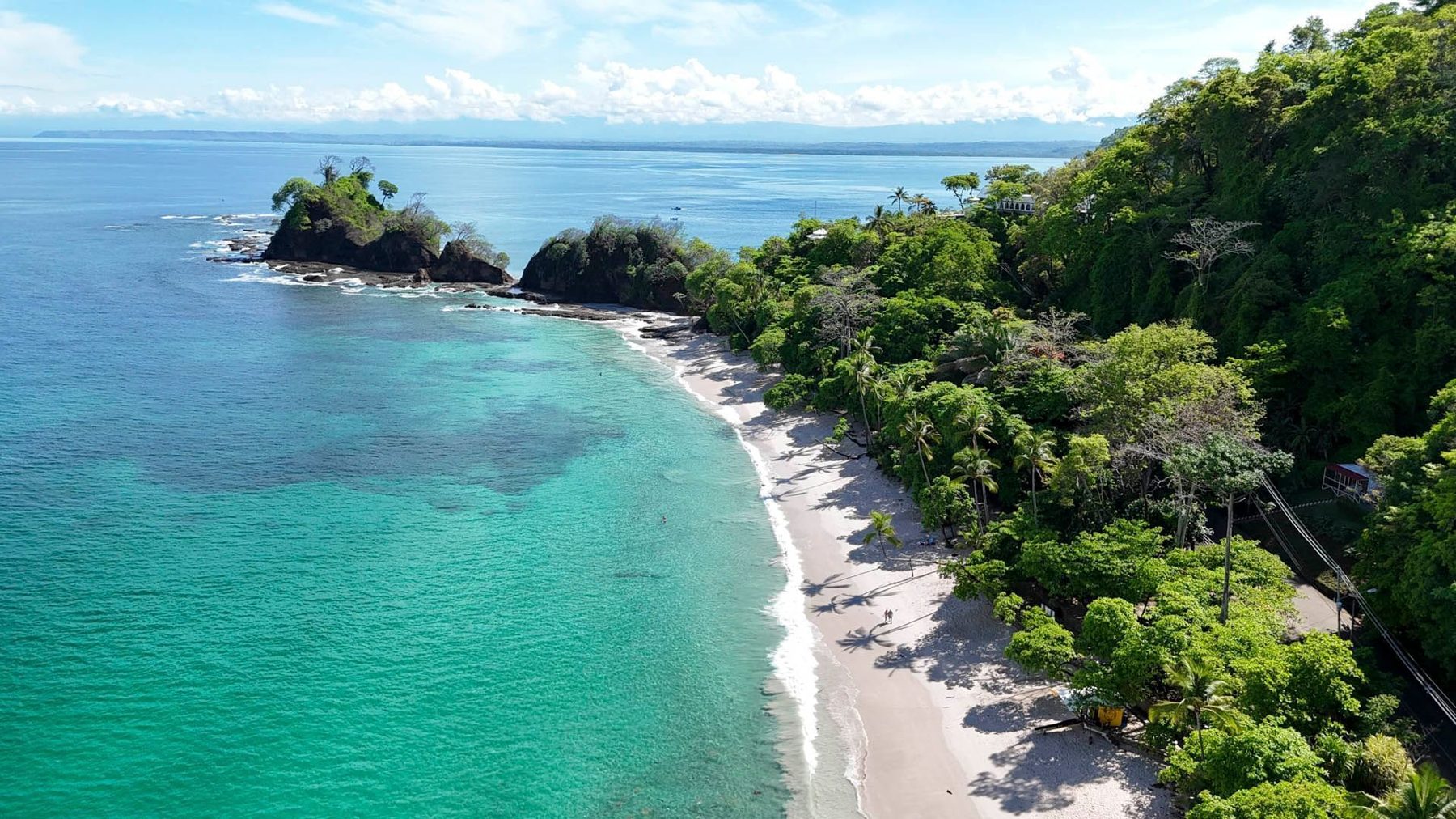
Scarlet macaws were nearly absent from the Jacó area twenty years ago, hunted and displaced by habitat loss along the Central Pacific. A conservation effort centered on Carara National Park — about 15 minutes north of Jacó on the coastal highway — helped the population recover to the point where macaws are now a regular sight in the trees all the way from Carara south through Punta Leona, Playa Mantas, and into Jacó itself. On any given morning in season, you'll hear them before you see them: a loud, hoarse screech in the canopy that announces their arrival before the flash of red and blue and yellow appears in the branches.
The best time to spot them is early morning, between 6:30 and 9:00am, when they're actively feeding in the almendro trees near the beach paths. They almost always move in pairs — scarlet macaws mate for life and rarely feed alone — and once you spot one, the second bird is almost always within ten meters. At Punta Leona, the path between the two main beaches runs through almendro groves that the macaws visit regularly. If you walk that path at dawn with your eyes up, you will almost certainly see them.
What makes a scarlet macaw unmistakable
Even if you've never been to Costa Rica, one look at a lapa roja in the wild and you understand instantly why they appear on the country's currency, its tourism logo, and on every piece of artwork in every souvenir shop. The plumage is extraordinary: a deep, saturated scarlet across the head and body, transitioning into bright yellow wing feathers, then a vivid electric blue at the wingtips and tail. The tail feathers are long — sometimes stretching 20 to 30 centimeters beyond the bird's body — and in flight they trail behind like streamers. They are large birds, nearly 90 centimeters from beak to tail, and when a pair flies low over the beach, the sound of their wings is audible from thirty meters away.
Up close in a tree, as in this video, what stands out most is how they use their feet. Macaws are zygodactyl — two toes forward, two backward — which gives them an almost hand-like grip. Watch them in the almendro tree and you'll see them rotating the almond to exactly the right angle before applying the beak, using the foot to hold the food steady the way a person holds a piece of fruit. It's another reminder of how intelligent these birds are, and why people who come to Costa Rica for the first time often describe the macaw encounter as the single most memorable wildlife moment of their trip.
The Jacó wildlife picture: macaws, monkeys, and more
A morning with the scarlet macaws at Punta Leona slots naturally into a broader wildlife-rich day near Jacó. The same forested coast that supports the macaw population also shelters white-faced capuchin monkeys, howler monkeys that rattle the jungle before sunrise, scarlet macaw-jay flocks (white-throated magpie-jays), coatis on the beach path, and sloths moving slowly through the canopy if you know which trees to look at. It's a real ecosystem right next to a world-class beach, which is something most beach destinations in the Caribbean or Mexico simply don't offer.
At www.jacobeachchef.com, we've been working in this area for sixteen years. We know where the macaws feed, what time the monkeys come down to the beach path, and which trees hold the sloths. That local knowledge is part of what we offer alongside the private chef and bartender services — a real sense of how to make the most of the Jacó area, not just the dinner on your villa table. If you're planning a trip and want recommendations on where to be and when, that's part of what www.jacobeachchef.com is here for.
Tips for watching macaws in the wild near Jacó
A few things that make the difference between spotting macaws and missing them entirely: listen first. Scarlet macaws are loud — you'll hear the call before you see the bird. Once you hear them, stand still and scan the canopy slowly, looking for red against the green. They blend in more than you'd expect when sitting still in an almendro tree with the leaves around them. Binoculars aren't required but they'll let you watch the feeding behavior up close. Don't approach the tree quickly or make sudden noise — the birds will flush and you'll lose the shot. Move slowly, keep your camera ready, and let them feed undisturbed. A patient ten minutes watching a pair of lapas rojas crack almonds in a coastal tree is one of the best free experiences Costa Rica offers.
If you're staying in a villa in Jacó and want to build the wildlife encounters into your trip alongside a private chef dinner, a pool day, or a beach morning at Playa Mantas, a quick WhatsApp message to www.jacobeachchef.com is the place to start. Tell us your dates and what you want out of the trip, and we'll help you put all the right pieces together — food, wildlife, beaches, and everything in between.